Supermarket
Where Parmigiano Reggiano comes from
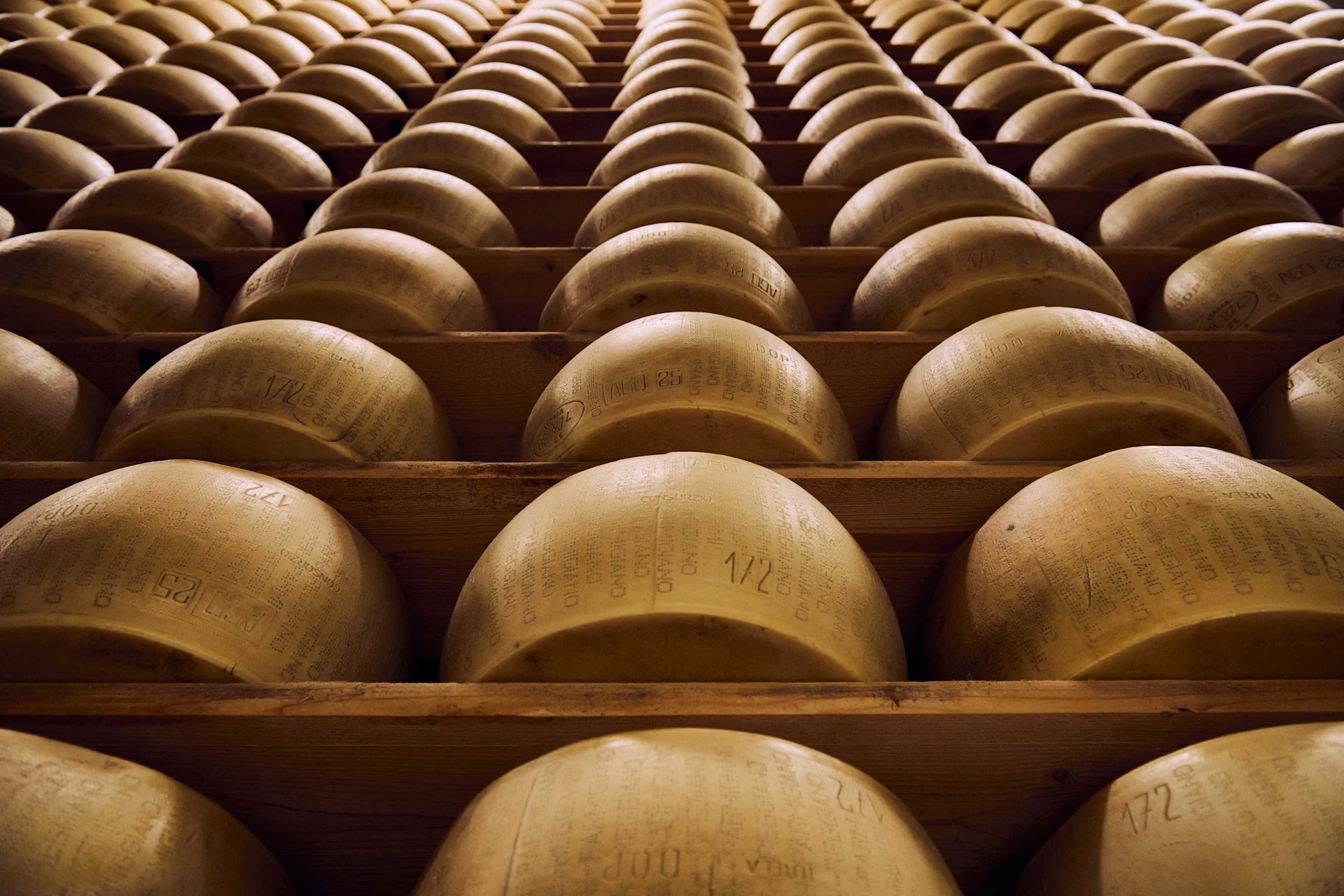
We visit the Italian cheese dairy that makes Parmigiano Reggiano for Migros.
navigation


Migros Industrie
The Migros plaited Zopf loaf is a staple of a delicious Sunday breakfast. What many people don't realise is that, despite state-of-the-art technology, each loaf is made by hand.
Move a strand of the dough across, then the right strand up and over the top of the left strand, the left strand up and over the top of the right strand, right over left, left over right...
In the hands of Maik Dietrich, a perfect plaited Zopf loaf is created in no time at all. It takes him ten seconds to braid two strands of dough on a tray next to the conveyor belt. When he puts the plaited Zopf loaf back on the belt, the next strands are quickly coming his way. Eight employees perform the same task. The fine aroma of bread wafts through the Migros Industrie bakery in Volketswil. Every week, 47,000 plaited Zopf loaves are made here – with this number almost tripling in the run-up to Christmas and Easter.
Dietrich is a plant operator. His main task is to ensure that the production of the speciality breads runs smoothly. He only rarely gets involved in the braiding himself. “However, if someone drops out, I lend a hand.”
On this late Friday morning, fresh plaited Zopf loaves are on the work schedule. Once they have been baked and packaged, they are delivered to Migros Cooperative Zurich stores at the weekend.

Previously, the early shift produced bake-at-home Zopf loaves – i.e. plaited Zopf loaves that are taken out of the oven earlier and customers need to bake at home to finish them off. They make up the majority of the items produced and are available throughout Switzerland.
Maik Dietrich and his team have to braid four to five plaited Zopf loaves per minute. “Otherwise, a traffic jam would form on the conveyor belt,” he says. No robots have yet been able to carry out this tricky work. New hires would need approximately three weeks to get up to speed and do everything correctly.
He points to two tables located a short distance away from the conveyor belts. Braiding can be practised there without being placed under time pressure. His team almost never makes any “braiding mistakes,” he says proudly.
Most of the work steps in our production facility are now carried out using machines.
The production facility for plaited Zopf loaves is located in a new building, which was opened at the beginning of 2025. With two ultra-modern production lines for small and speciality breads, Volketswil has since become the leading centre for fresh bread and baked goods in Switzerland. It supplies all of the Migros cooperatives.
“Most of the work steps in our production facility are now carried out using machines,” says Thomas Osterwalder, Head of Bread Production. He has just joined the "braiders."
But why can't braiding be automated? Osterwalder explains that the dough has to be drawn out slightly during braiding. “These precise motions are difficult for machines to perform.”

When he shows children round the factory on “Future Careers Day”, he tells them: “Build a machine that can do this and you'll never have to work again.”
Some of the braiders used to perform other tasks, such as spraying the plaited Zopf loaves with egg mixture by hand or heaving the trays of dough into the ovens. Automation has made the remaining work less strenuous. However, the headcount in Volketswil has remained the same, assures Osterwalder.
We combine state-of-the-art technology with optimised working conditions to raise product quality to a new level.
Another advantage of automation is that the new systems contain flexible modules that can be customised in just a few simple steps. This means that production can be quickly switched from a 300-gram plaited Zopf loaf to the 700-gram version.
Osterwalder: “We combine state-of-the-art technology with optimised working conditions to raise product quality to a new level.”
The entire process takes three hours – from mixing the dough to the finished, packaged plaited Zopf loaf. People continue to be deployed at different stations.
Almost every step in the production process is data-based. In other words, all of the machines are digitally networked and communicate with each other. For example, sensors record in real time the quantities of raw materials that are taken from the warehouse and, where necessary, place an order to have these materials restocked.
Osterwalder states that the bakery favours Swiss quality when it comes to raw materials. “Come on, I'll show you where the action happens.” He leaves the braiders and marches straight through the hall.
The first station is a large cauldron. Flour, salt and sugar from the silo system are fed into the cauldron via pipes. Water, butter, milk and yeast are added separately. All of the ingredients are processed into a dough – made fresh every morning.
An employee then transports the cauldron containing the finished dough to a machine directly opposite. This machine divides the dough into equal portions, producing up to 5,000 pieces of dough per hour, which are then moulded into balls. A scale within the conveyor belt ensures that they are each of the correct weight.
The dough balls are subsequently transported into a tall, closed cabinet: the intermediate proofer. “They stay in there for 15 minutes to rise,” says Osterwalder.
A series of rollers and drag nets then stretches the dough out to the right length: 40 to 60 centimetres depending on the size of the plaited Zopf loaf. After spending time in another proofer, the dough strands are then transported to the braiders.
Before being baked, the finished braids visit two additional stations. They are kept in the final proofing cabinet for another hour at 30 degrees in order for them to rest for a sufficient period of time. The braids then pass through a station equipped with tiny nozzles that spray fine egg mist every few seconds.

After seeing all of this technology, we move on to the next room to view the centrepiece of the production facility – the huge oven. It comprises six shelves with a total baking area of 200 square metres. The shelves can be filled separately, offering greater flexibility in production.
“It smells really good here!” exclaims Thomas Osterwalder. The Zopf loaves take 30 to 45 minutes to bake. They then pass through a metal detector to check for foreign objects.
The hall next door is so big that you almost don't notice the few employees working here. Two women are standing at a conveyor belt and quickly and routinely packing the fresh plaited Zopf loaves into paper bags.
Prior to this stage of production, the still-hot baked goods are cooled in a closed chamber for 50 minutes by means of a stream of air. Towards the back of the room, an employee is stacking the packaged plaited Zopf loaves into reusable containers. These are stacked on pallets in an automated process one floor below. From there, the fresh Zopf loaves are transported to the Migros Cooperative Zurich stores.
The plant operator, Maik Dietrich, approaches Thomas Osterwalder, informing him that the last batch of dough for today is being produced.
Dietrich says that he occasionally also bakes plaited Zopf loaves himself at home, especially when his parents-in-law visit. “But when I am busy, I go out and buy our Migros plaited Zopf loaves – they taste just as delicious.”
Discover exciting stories about all aspects of Migros, our commitment and the people behind it. We also provide practical advice for everyday life.
Supermarket
We visit the Italian cheese dairy that makes Parmigiano Reggiano for Migros.

Supermarket
From the initial idea to production: how Easter bunnies are created for Migros and who belongs to the bunny-making team.

Food waste
Any meat products that remain unsold shortly before their use-by date are frozen and then sold at half price.

Migros Group
Travelling with Migros CEO Mario Irminger in India, where he visits producers and an extraordinary school.
Migros Commitment
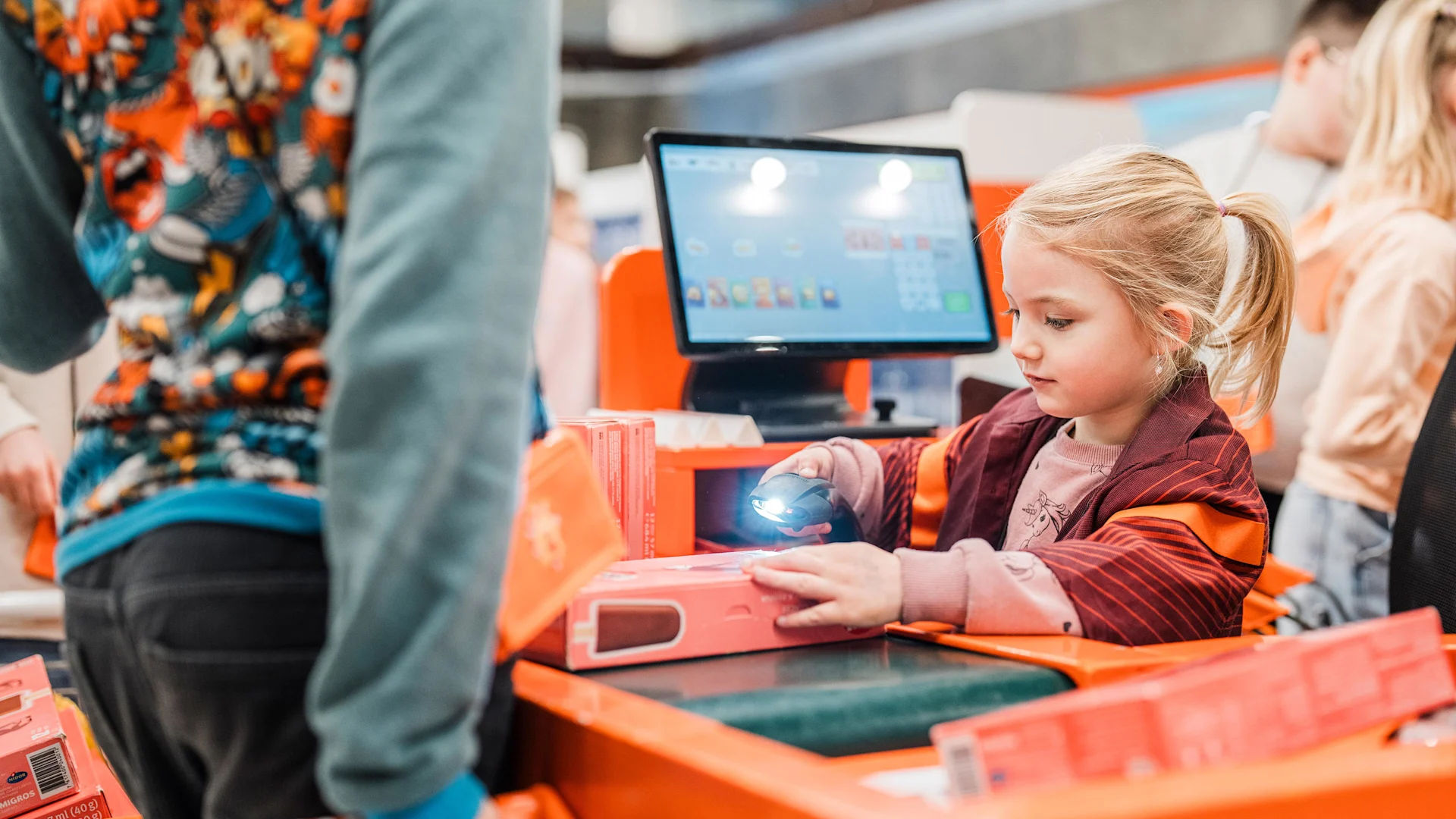
At Switzerland’s largest play store, children can work the till, fill shelves and pretend to shop.

Work environment
Two Migros employees talk about the balancing act of being parents, looking after their children and having a career.
Work environment
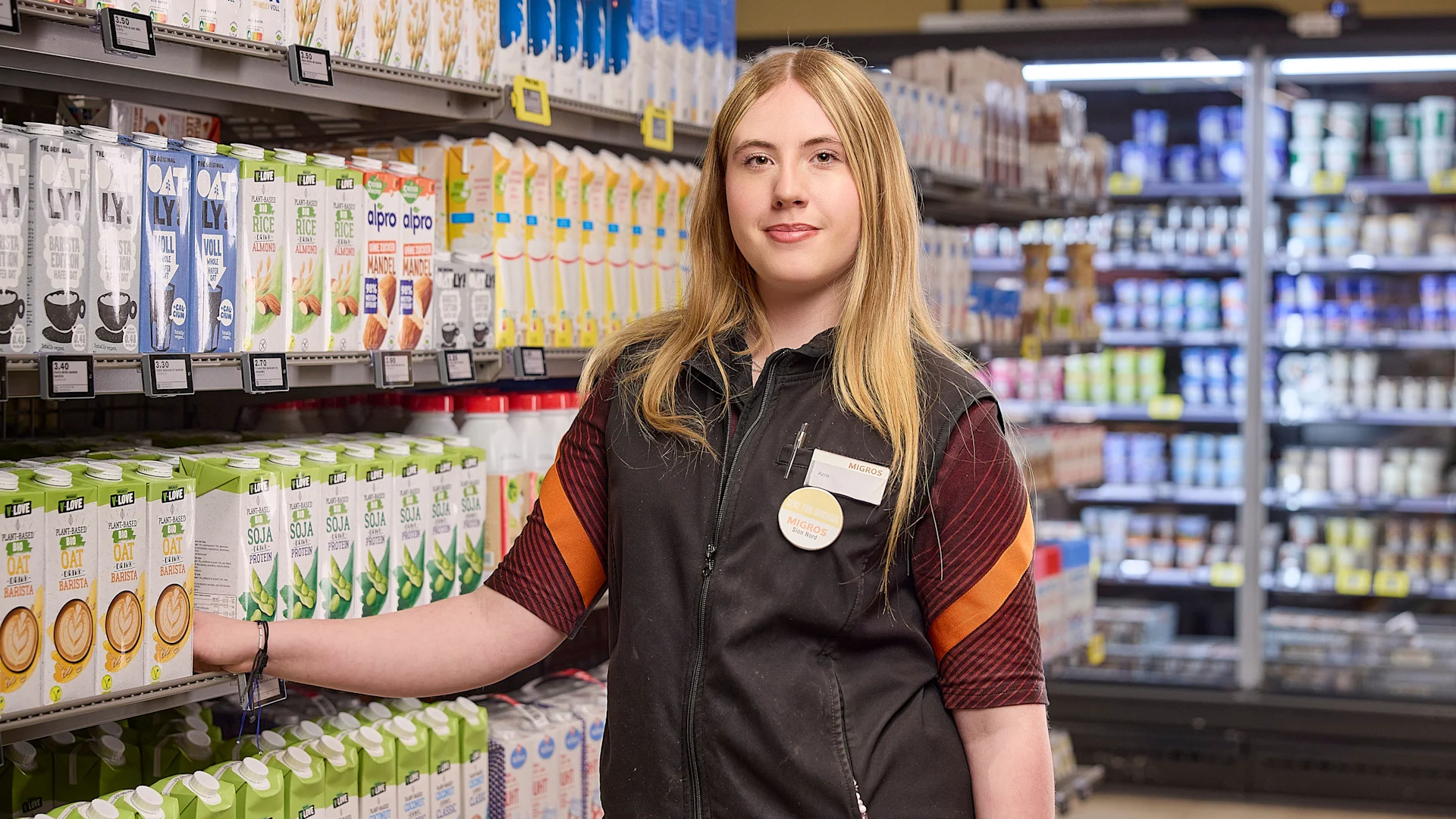
Apprentices ran a Migros store in Sion by themselves. We find out what they learned from the experience.
Sustainability
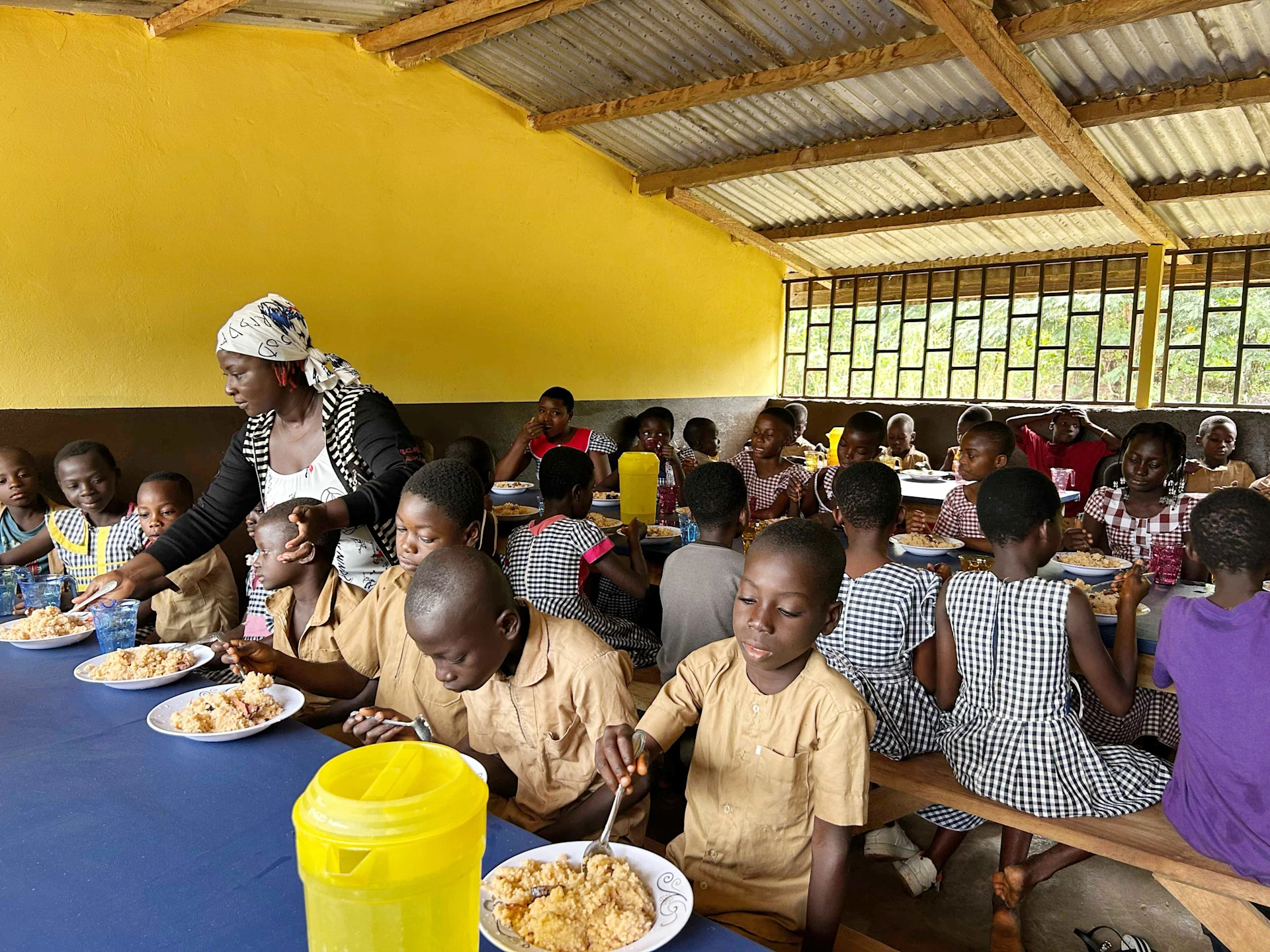
If you buy a bar of "Côte d'Ivoire" chocolate, you will be contributing to a success story in West Africa.

Supermarket
Migros began making its own products just three years after it was founded. How well do you know them?

Migros anniversary
The many ways Migros celebrated its 100th birthday. A look back at Migros’ centenary.

Work environment
We visited the huge Digitec Galaxus logistics centre, which is a hive of activity over the Christmas period.